
1875: Grave, Kensal Green Cemetary, London. Currently the grave is in a dilapidated state, but until we can find the rightful owner of the tomb, we do not have permission to restore it.
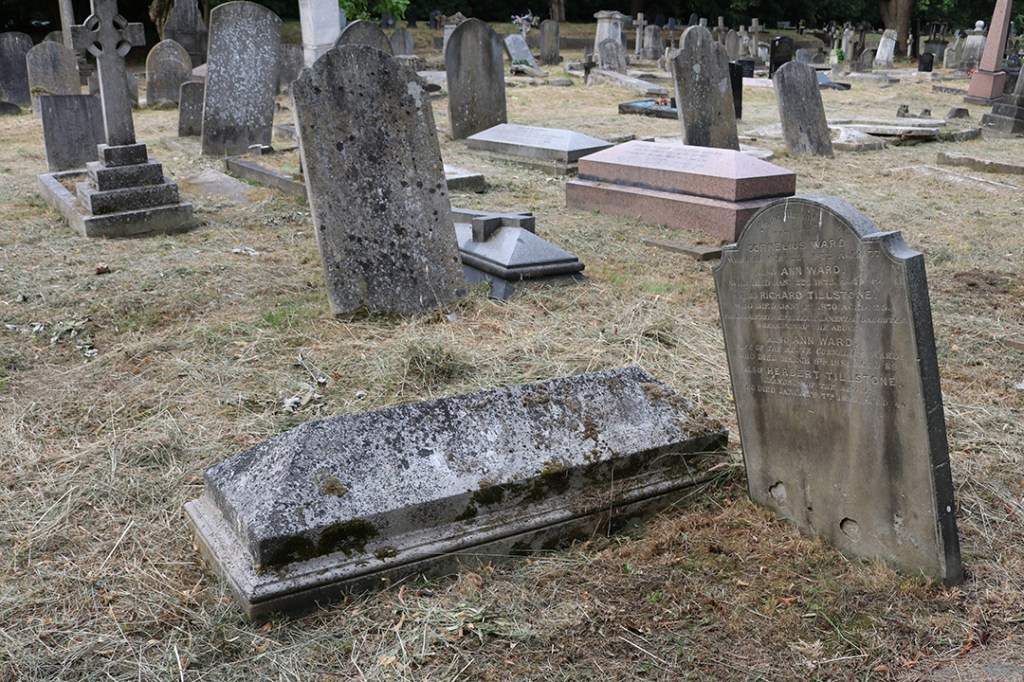
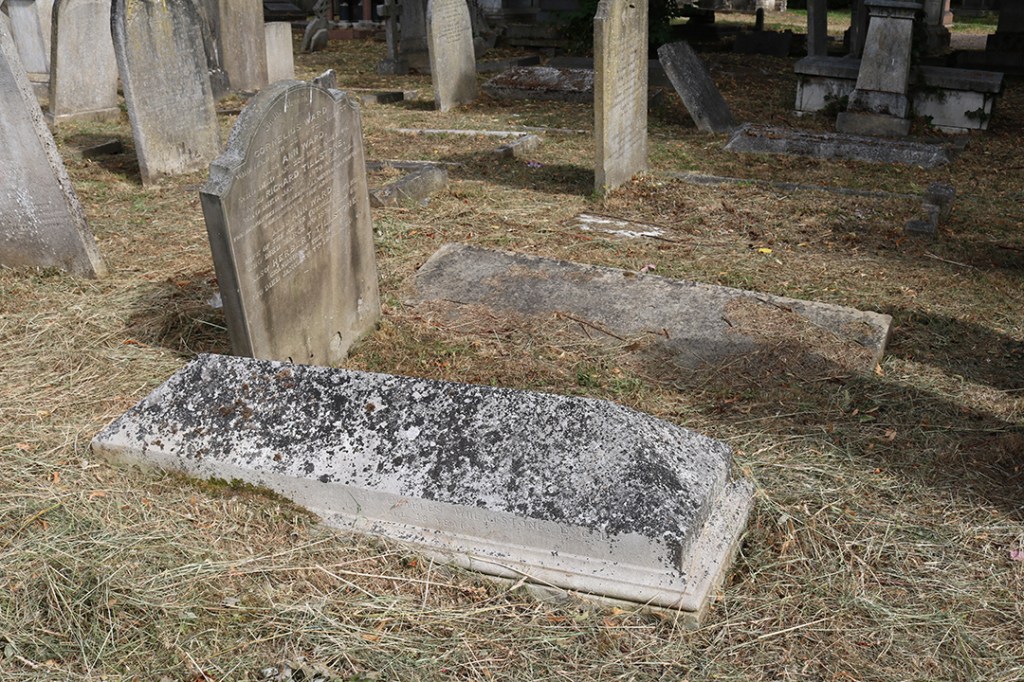
Wheatstone family grave, including Sir Charles Wheatstone. Photographed in 2025 showing its delapidated state.
1877: Marble bust of Sir Charles Wheatstone created by W. G. Brooker and exhibited at the Royal Academy of Arts in 1878. The original is in the collection of the Science Museum; a plaster replica is held by the Brian May Archive of Stereoscopy after previously being held at the Concertina Museum.
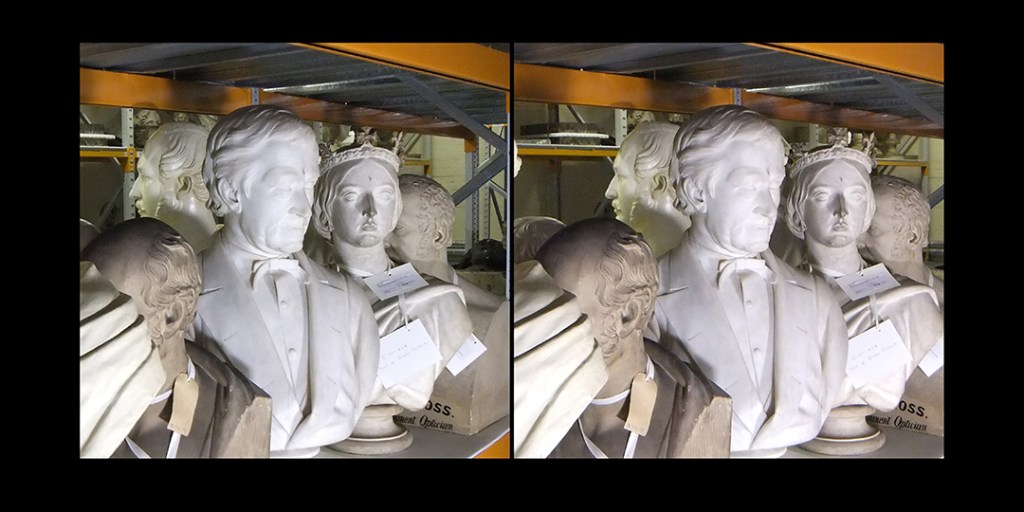
Marble bust of Sir Charles Wheatstone. Science Museum Group Collection. Photographed with kind permission of Adrian Whicher in 2018, when it was in storage in Blythe House, London.
c.1881: Creation of the Wheatstone Physics Laboratory at King’s College, London.
1886: A plaster maquette of Professor Sir Charles Wheatstone was made by William Silver Frith (1850-1924), for a statue that was never erected. The model is held at the Museum of Gloucester. Please see ‘Events‘ for a video about this maquette.

Plaster maquette of Professor Sir Charles Wheatstone by William Silver Frith. Museum of Gloucester collection. Photographed in 2023 with kind permission of Amy Washington.

Details of plaster maquette of Professor Sir Charles Wheatstone by William Silver Frith. Museum of Gloucester collection. Photographed in 2025 by Amy Washington, Museum of Gloucester.
1906: Inscription ‘Wheatstone’ on the Royal School of Mines building, part of the Imperial College London campus, Prince Consort Road, London. Designed by Sir Aston Webb, the building contains the surnames of 30 scientists on its exterior walls.

Royal School of Mines building, Imperial College London. Photographed 2025.
c.1911: Creation of the title ‘Wheatstone Professor of Physics’ at King’s College, London. (Thanks to Oliver Snaith, Archives Assistant, KCL, for the date information).
1925, October 19th: Brass Memorial tablet, unveiled on the north outside wall of St. Michael’s Church, Gloucester, in the heart of the city at The Cross, by a committee set up by William Bellows.
- Inscription: ‘1802 – 1875 SIR CHARLES WHEATSTONE, D.C.L., LL.D., F.R.S. Born at the Manor House, Barnwood, Gloucester, 6 February, 1802. Pioneer of the Electric Telegraph and the first, with (Sir) Wm. F. Cooke, to render it available for the public transmission of messages, 1837. Inventor of the Stereoscope, 1838. Conducted the first experiments in submarine telegraphy, 1844. Contributed to our knowledge of Acoustics and of Spectrum Analysis. Invented the Rheostat, the Polar Clock, the Automatic Transmitter and Receiver and the Rotating Mirror for determining the speed of Electricity. Applied and Improved the Resistance Balance of Christie, known as the “Wheatstone Bridge.” Invented the self-exciting shunt-wound Dynamo, 1867. Knighted, 1868. Died in Paris, 19 Oct., 1875. Buried at Kensal Green Cemetery, London. To commemorate his Service to Science this Tablet is placed here on the 50th anniversary of his death.’ Included on the tablet is a striking relief portrait of Wheatstone after one by Samuel Laurence.
- The tablet was removed to the Technical College around 1959. It was later moved back to the interior of St. Michael’s Tower, Gloucester, where it can be found today in the Heritage Centre, hidden behind advertising panels and chair storage, but the volunteers are happy to show you it.
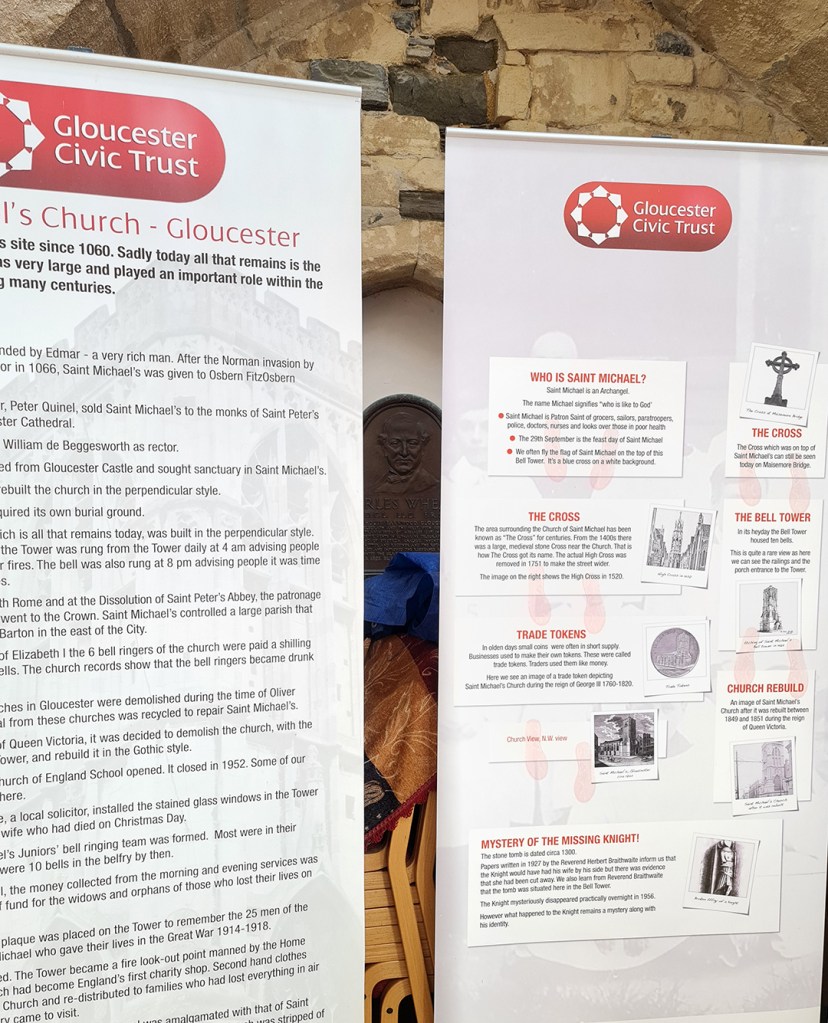

The Wheatstone memorial tablet, St. Michael’s Tower, Gloucester, Gloucester Civic Trust. Photographed in 2023. Many thanks to the kind volunteers for making it accessible to me.
1947, February 25th: Wheatstone Hall reopened in the City Public Museum of Gloucester, Brunswick Road. Wheatstone Hall was a room taken over by the Museum Committee from the old Technical College and was (and still is) used as an assembly room and lecture hall.

Wheatstone Hall banner, Museum of Gloucester. Photographed in 2023.
1981: Ceramic blue plaque installed at Wheatstone’s former home, 19 Park Crescent, Regent’s Park, London, W1B 1AL, City of Westminster by Greater London Council.
- Inscription: ‘SIR CHARLES WHEATSTONE 1802-1875 Scientist and Inventor lived here.’
- Details: https://www.english-heritage.org.uk/visit/blue-plaques/charles-wheatstone/
1992, May 8th: Official opening of the Wheatstone Centre (also called the Wheatstone Day Hospice), a MacMillian Cancer Service day hospice, on North Upton Lane, Barnwood, Gloucester, by Prince Charles, but was first in use from July 16th 1991. (Since closed).
1999: Ceramic blue plaque installed at Wheatstone’s former childhood home, 52/54 Westgate St., Gloucester, by The Institute of Physics.
- Inscription: ‘SIR CHARLES WHEATSTONE FRS 1802-1875 PHYSICIST SPENT HIS EARLY CHILDHOOD IN THIS HOUSE 1802 – 1806.’
- Details: https://physicshistory.org.uk/men/WC.htm

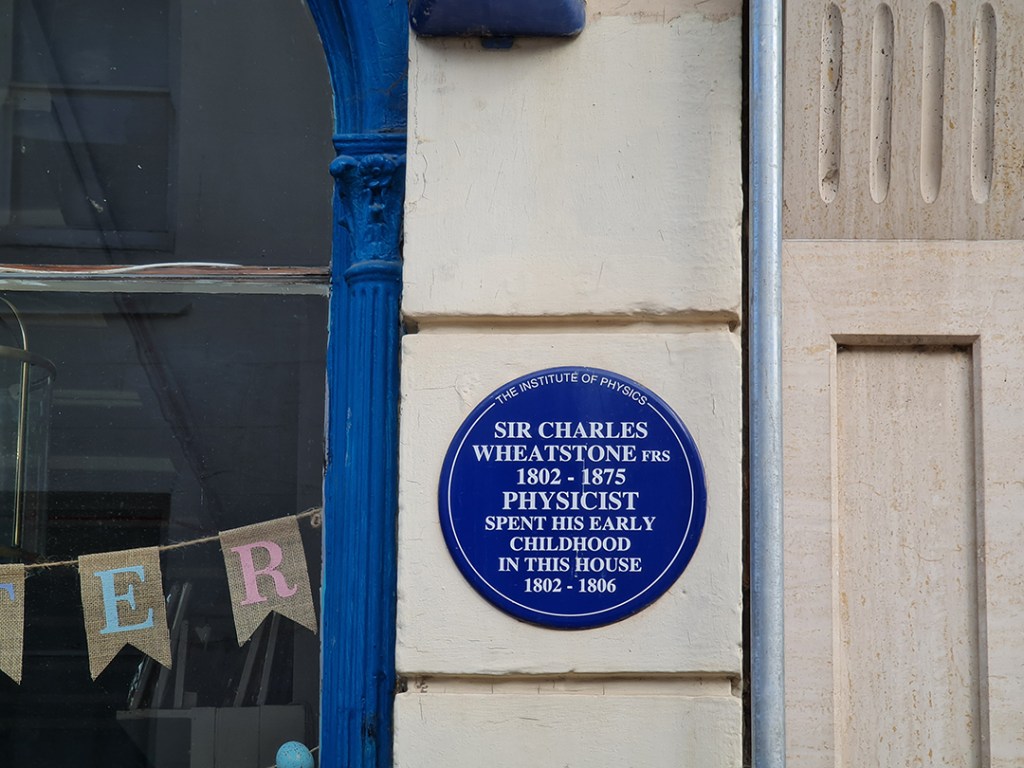
Blue plaque at 52/54 Westgate St., Gloucester. Photographed in 2023.
2002, March 4th: Wheatstone Inn, Barnwood, Gloucestershire, opened. Named in honour of Sir Charles Wheatstone, the pub now bears little association with him other than the name. The sign outside shows wheat and a grinding stone. A large photographic portrait of Wheatstone was donated to the pub in 2023, but has not been displayed to our knowledge.
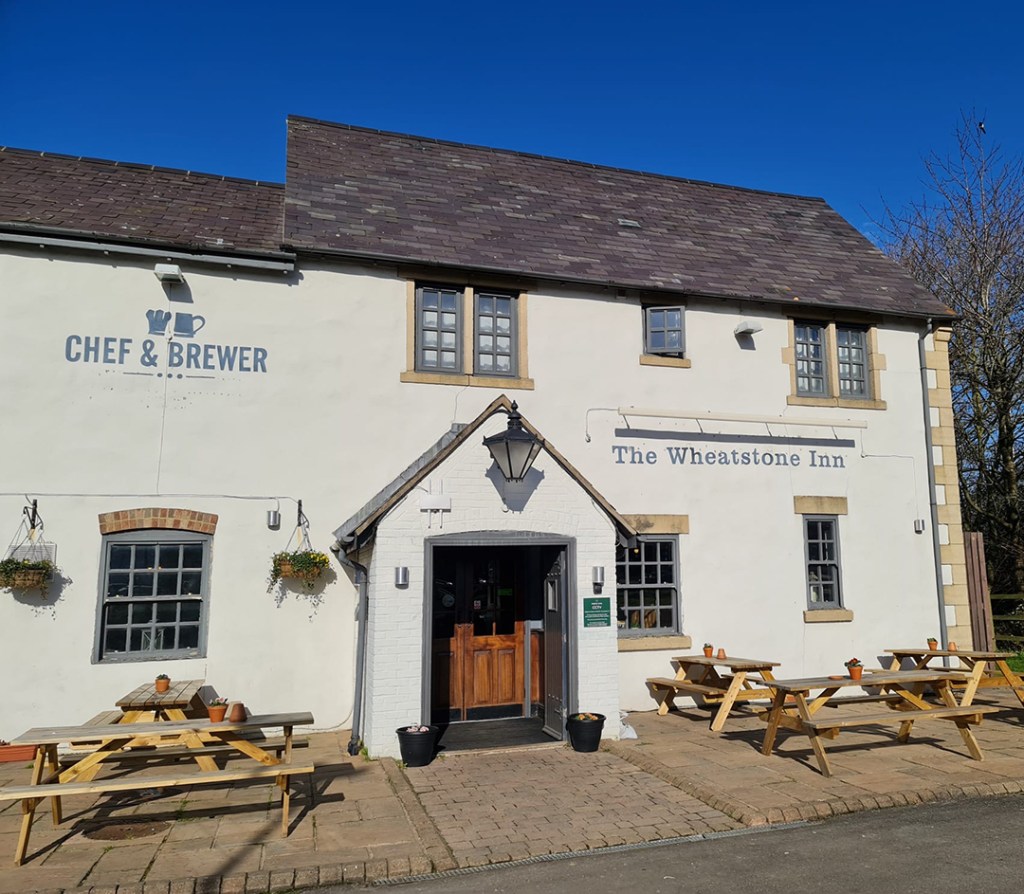
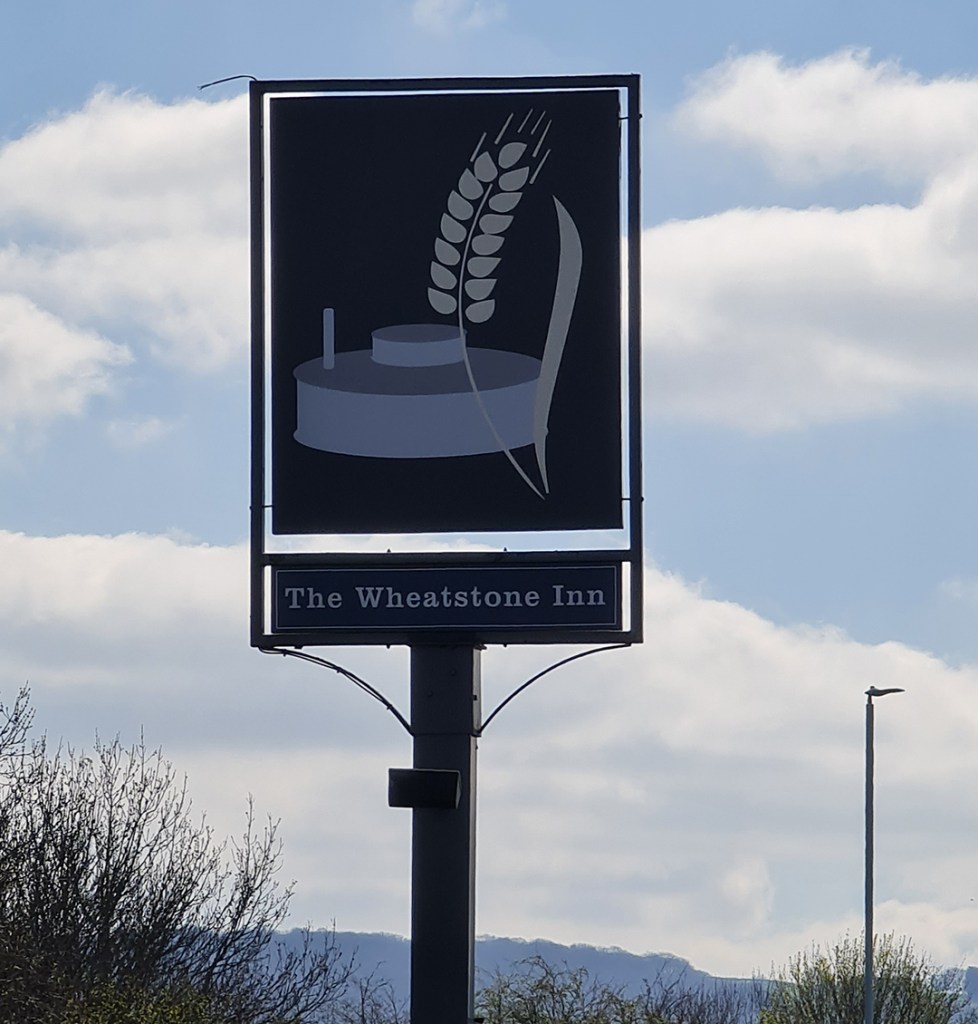
The Wheatstone Inn and sign. Photographed in 2023.
2018, Dec 10th: King’s College London proposed for Wheatstone to be on the new Bank of England £50 note, after nominations were requested. Their webpage gave information as to why Wheatstone should have been on the note and a link to where people could nominate him. Ultimately, in 2021, the honour went to scientist Alan Turning.
Research and information: Rebecca Sharpe, The Brian May Archive of Stereoscopy.
 CharlesWheatstone.com