
1802
- February 6th: Charles Wheatstone, elder son of William, a cordwainer, and Beata Wheatstone, was born at the Manor House, Barnwood, Gloucester, England.
- March 17th: baptised at St. Mary de Lode Church, Gloucester.
1806
- The Wheatstone family (William b. 1775, Beata b.1771, Sophia Ann b.1800, Charles b.1802 and William Dolman b.1803) moved to London, where William manufactured musical intruments and gave instruction on the flute and flageolet.
- Charles started attending school at Kennington, London, kept by Mrs. Castlemaine, who was astonished by his progress, but described him as a ‘nervous and timid child’.
1809
- Sister Charlotte Georgina Wheatstone born.
c.1813
- Attended school in Vere Street, London. Excelled in Mathematics and Physics, but jeopardised winning a gold medal for proficiency in French by refusing to recite a speech.
- William Wheatstone moved his business to 128 Pall Mall, London.
1816
- Mother, Beata, died, age 44.
- Apprenticeship, age 14, with his uncle Charles Wheatstone, who had a musical warehouse business at 436 The Strand, London. Charles Snr. complained his nephew neglected his work to pore over books, preferring to shut himself away in an attic.
1817
- Returned to his father, William, who encouraged him in scientific studies.
- Charles’ activities included translating French poetry, writing lines on the lyre, and writing two songs.
1818
- Invented a keyed flute harmonique, age 16, although nothing is known about this instrument.
c.1819
- William Wheatstone opened ‘Wheatstone’s Musical Museum’, where Charles exhibited practical experiments.
1821
- Invented and demonstrated the Acoucryptophone, or enchanted lyre, at his father’s shop in Pall Mall, London to great acclaim.
1822
- Held an exhibition in the Royal Opera Arcade, demonstrating both music and voice conduction with his Diaphonicon.
1823
- Encouraged by Danish scientist, Christian Örste, Wheatstone published his first paper on acoustics and the transmission of sound: ‘New Experiments in Sound’, Thomson’s Annals of Philosophy, 1823, Vol. vi, p. 81-90.
- Publication: A paper entitled ‘Experiments relating to the Passage of Sound through Rectiliniar and Bent Conductors’, read by Arago, Academy of Sciences, France, June 30th 1823.
- A letter by Sophie Germain concerning ‘The experiments of Vibrations on Metallic Plates by M. Wheatstone’ read at the Academy of Sciences, France, 1st September 1823.
- Charles Wheatstone Snr. (his uncle) passed away, and his business in The Strand was taken over by Charles Jnr. and his brother William Dolman Wheatstone, whilst they also kept the Wheatstone Musical Museum in Spring Gardens open.
1824
- Pamphlet publication: An Explanation of the Harmonic Diagram, invented by C. Wheatstone, London (London: C. Wheatstone, 436 Strand, 1824).
1826
- First demonstrated his kaleidaphone.
- William Wheatstone’s business amalgamated with his sons’, where Charles continued to describe himself as a ‘musical instrument maker’.
1827
- Publication: a paper entitled ‘Description of the kaleidophone or phonic kaleidoscope: a new philosophical toy, for the illustration of several interesting and amusing acoustical and optical phenomena’, Quarterly Journal of Science, Literature, and Art, 1827, Vol. I; and patented his invention.
- Publication: a paper entitled ‘Experiments on Audition’, Quarterly Journal of Science, Literature, and Art, 1827, Vol. ii.
1828
- Publication: a paper entitled ‘On the Resonances, or Reciprocated Vibrations of Columns of Air’, Quarterly Journal of Science, Literature, and Art, 1828, Vol. iii, p.175-83.
- Created a Terpsiphone, an experimental musical instrument that aimed to reproduce sound using columns of air in a toroid shape.
1829
- The musical warehouse in The Strand was demolished and the Wheatstone brothers reopened the business ‘Wheatstone & Co., Music Sellers and Publishers’ at 20 Conduit Street, London, where they also lived.
- Invented the Symphonium.
- Invented the Concertina.
1830
- Began studying electricity and electromagnetism, seeking to measure the velocity of electricity.
- Publication: An anonymous paper entitled ‘Contributions to the Physiology of Vision. No. I.‘ Journal of the Royal Institution, Vol. 1, October 1830, p101-117.
1831
- Publication: An anonymous paper entitled ‘Contributions to the Physiology of Vision. No. II.’ Journal of the Royal Institution, Vol. 1, May 1831, p534-537.
- Publication: a paper entitled ‘Transmisson of Sounds through Solid Linear Conductors, and on their Subsequent Reciprocation’, Journal of the Royal Institution, 1831, Vol. ii.
1832
- Invents reflecting and refracting Stereoscopes, but does not present them to the world yet.
- Publication: A paper entitled ‘On the Vibrations of Columns of Air in Cylindrical and Conical Tubes’ given to the Royal Institution, Athenaeum, March 24 1832, p.194.
- Publication: Read a paper entitled ‘Some Remarks on Dreaming, Somnambulism and other States of Partial Activity in the Cerebral Faculties’ to the London Phrenological Society, Jan. 1832.
1833
- Herbert Mayo’s Outlines of Human Physiology, 3rd Ed., mentions ‘Wheatstone’s investigations respecting binocular vision’.
- Publication: A paper entitled ‘On the Figures Obtained by Strewing Sand on Vibrating Surfaces, Commonly Called Acoustic Figures‘, Philosophical Transactions of the Royal Society, 1833, pp.593-634.
1834
- Appointed the first Professor of Experimental Philosophy at King’s College, London, where he started a series of lectures on sound; however, he had a reputation of being shy and rarely lectured afterwards, but retained his position at King’s College for life.
- Began experimenting on the rate of transmission of electricity along wires in the vaults under King’s College, London, making the first measurement of the velocity of an electrical current passing through a wire by using a rotating mirror, publishing the results in Philosophical Transactions.
- Publication: A paper entitled ‘An Account of some Experiments to Measure the Velocity of Electricity and the Duration of Electric Light‘, Philosophical Transactions of the Royal Society, 1834, p.583-591.
1835
- Gave a lecture at the Royal Institution on Speaking Machines; devices capable of reproducing the human voice. Wheatstone built a speaking machine, which he kept at King’s College, London.
- Publication: A paper entitled ‘An Account of Some Experiments the Velocity of Electricity and the Duration of Electric Light’ read at the Academy of Sciences, France, 12th January 1835.
- Read the papers ‘Experimental Verification of Bernouilli’s Theory of Wind Instruments’, ‘Remarks on Purkinje’s Experiments’, ‘On the Prismatic Decomposition of Electric Light’ and ‘Imitation of Human Speech by Mechanism’ before the British Association meeting at Dublin. Published: Report of the British Association, 1835, p.11-12, 14, 551-553, 558.
1836
- January, 21st: Elected a Fellow of the Royal Society.
- June: In his lectures at King’s College, London, he proposed to convert his apparatus for measuring the velocity of electricity, a circuit of copper wire nearly four miles in length, into an electric telegraph.
- August: Wheatstone visited Lacock Abbey, Wiltshire, the residence of Willam Henry Fox Talbot, English scientist, inventor and photography pioneer. Also present were Constance Talbot, Sir David Brewster, William Whewell, Dr Peter Mark Roget, Charles Babbage and William Snow Harris.
1837
- Wheatstone provided scientific assistance to William Fothergill Cooke to make the telegraph become a viable venture. They co-patented on of the earliest designs of the telegraph, the ‘five-needle telegraph’.
- Cooke and Wheatstone publicly demonstrated their telegraph by running a line alongside the railway tracks between Camden and Euston and successfully transmitted and received a message.
- Devoted time to researching and developing submarine telegraphy.
- Business renamed ‘Wheatstone, Charles & William, Musical instrument makers and music sellers.’
- Publication: An article entitled ‘On the Thermo-Electric Spark’, Philosophical Magazine, 1837, Vol. X, p.414-417.
- Publication: [A chapter looking at the various attempts which have been made to imitate the articulations of speech by mechanical means.] London and Westminster Review, 1837, Vol. 28, p.27-41.
- Patent: Cooke, W F, and Wheatstone, C, 1837, ‘A.D. 1837, No. 7390 [Improvements in giving signals and sounding alarums in distant places by means of electric currents transmitted through metallic circuits]’ England & Wales.
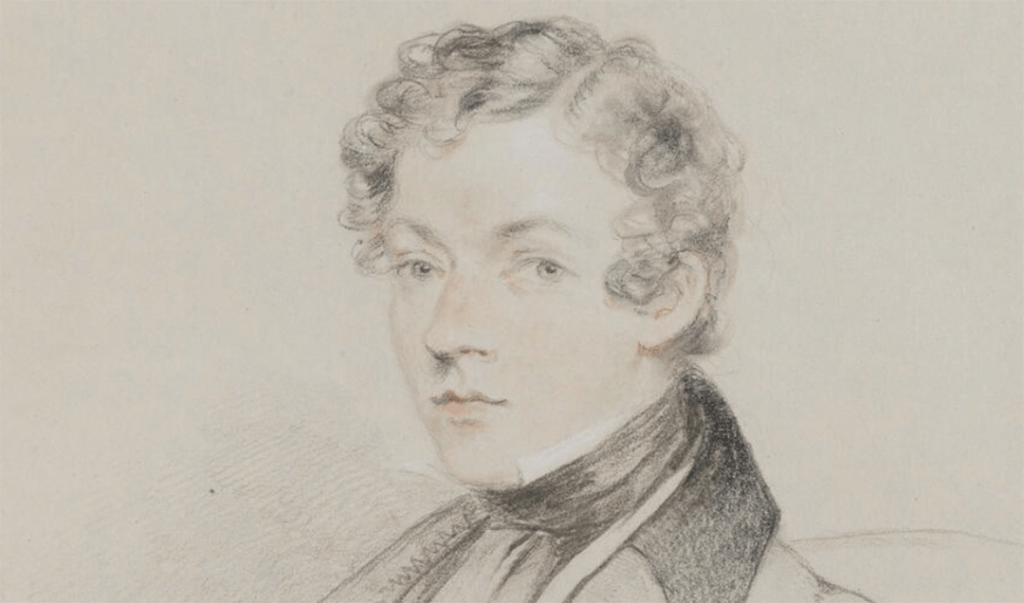
Charles Wheatstone, by William Brockedon. Chalk, 1837. National Portrait Gallery Collection, NPG 2515(84)
1838
- June 21st: Presented his invention of the mirror stereoscope and theory of binocular vision to the Royal Society. Wheatstone explained how each eye sees a slightly different perspective of the world, and the brain fuses the two, into one 3-D image. He demonstrated with his mirror, or reflecting, stereoscope and drawings.
- August: Presented his invention of the mirror stereoscope and theory of binocular vision to the British Association for the Advancement of Science (BAAS) meeting in Newcastle-upon-Tyne, reading a shorter paper than the one he read at the Royal Society. It was there where David Brewster first saw Wheatstone’s demonstration with the instrument; it was reported in the Athenaeum that Brewster considered it as one of the most valuable optical papers which had been presented to the Section.
- Publication: A Paper entitled ‘Contributions to the Physiology of Vision. — Part the First. On Some Remarkable, and Hitherto Unobserved, Phenomena of Binocular Vision‘, Philosophical Transactions of the Royal Society, 1838, p.371-394.
- Became a member of the council of the British Association for the Advancement of Science.
- The first public line of telegraph constructed on the Blackwall Railway.
1840
- Developed designs of cell or battery and early magneto-induction devices.
- Developed the ABC telegraph.
- Requested William Henry Fox Talbot to take photographs for his reflecting stereoscope, which were unsuccessful due to the large angles between them.
- c1840. Either suggested or commissioned Ada Lovelace to undertake the scientific translation of text by Captain Luigi Menabrea covering Charles Babbage’s lectures on the Analytical Engine in Turin. Ada added supplementary and expansive notes on the Analytical Engine to the translation, including describing a method of using the machine to calculate Bernoulli numbers, which is often called the first published computer program. This is why she has been referred to as the first computer programmer. Wheatstone went on to name one of his daughter’s after Ada.
- Awarded the Royal Medal by the Royal Society, for his paper entitled ‘Contributions to the physiology of vision’, published in the Philosophical Transactions for 1838.
- Publication: A paper entitled ‘Description of the Electro-magnetic Clock‘, Proceedings of the Royal Society, 1840, Vol. iv, p249-250.
- Publication: A paper entitled ‘Account of an Electro-magnetic Telegraph’, Annals of Electricity, Vol. 5, 1840, p.337-349.
- Patent: Wheatstone, C and Cooke, W F, 1840, ‘A.D. 1840, No. 8345 [Improvements in giving signals and sounding alarms in distant places by means of electric currents transmitted through metallic circuits]’, England & Wales.

Charles Wheatstone, unknown photographer. Daguerreotype, c.1840. Private collection.
1841
- Requested calotypist Henry Collen to take photographs for his reflecting stereoscope, which he successfully took of Charles Babbage on 17th August.
- Requested Richard Beard and his assistant John Frederick Goddard to take photographs for his reflecting stereoscope, which Goddard successfully took of Beard Jnr.
1842
- Publication: ‘Letter to Col. Sabine on a New Meterological Instrument’ Report of the British Association for the Advancement of Science, 1842, pt.2, p9.
1843
- Gave the annual Bakerian Lecture to the Royal Society entitled, ‘An Account of Several New Instruments and Processes for Determining the Constants of a Voltaic Circuit.’
- Publicaton: A paper entitled ‘An Account of Several New Instruments and Processes for Determining the Constants of a Voltaic Circuit‘, Philosophical Transactions of the Royal Society, 1843, p.303-327.
- Awarded the Royal Medal by the Royal Society, for his paper entitled, ‘An Account of Several New Instruments and Processes for Determining the Constants of a Voltaic Circuit’.
- Publication: An article entitled ‘Description of the Telegraph Thermometer’, Report of the British Association, 1843, p128-129.
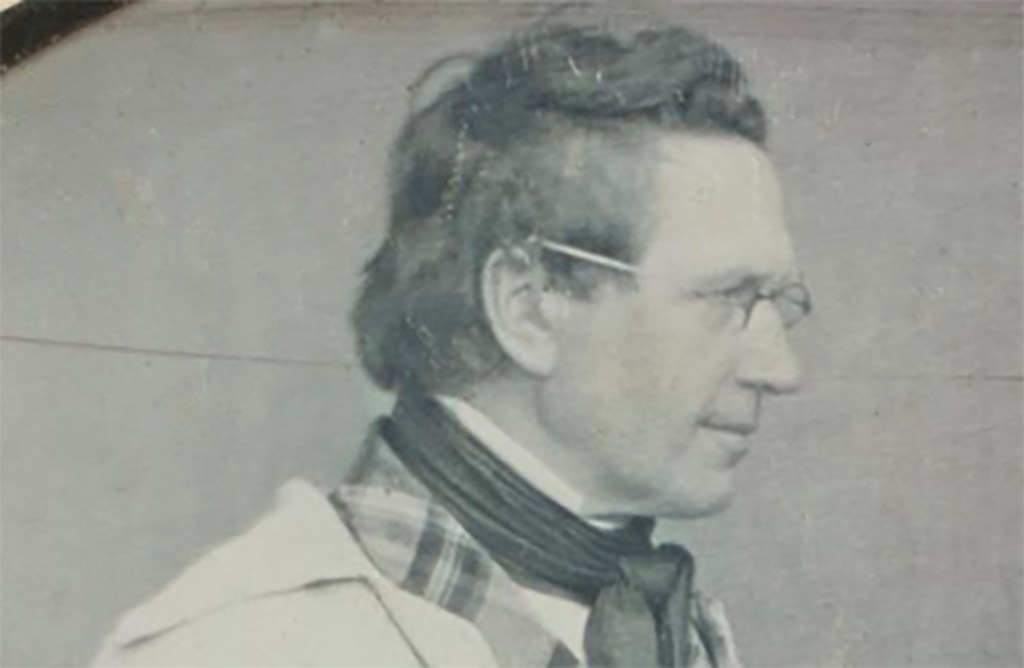
Charles Wheatstone, by Charles Chevalier. Daguerreotype, c.1843. Eastman Museum collection, 1976.0168.0013.
1844
- Publication: A paper entitled ‘On the Singular Effect of the Juxtaposition of Certain Colours Under Particular Circumstances’, Report of the British Assocation for the Advancement of Science, 1844, p.10.
- Publication: An article entitled ‘Enregistreur électromagnétique pour les Observations Météorologiques’, Archives de l’Électricité, par A. de la Rive, 1844, t.iv, p.170-172.
1845
- Became a member of the Academy of Sciences of Turin.
- Publication: A paper entitled ‘Note sur le Chronoscope électromagnétique’, Comptes Rendus de l’Académie des Sciences, 1845, tome xx, p.1554-1561.
1846
- Wheatstone was at Florence Nightingale’s father’s house at Embly; Sir Roderick Murchison recalled in his journal: “Wheatstone was of the party, and he engaged to perform the trick of the invisible girl, by telling you what was in places where no one could see anything. But to do this a confederate was required, and peering into the faces of all the women, he selected Florence as his accomplice, and, having taken her out of the room for half an hour, they came back and performed the trick. On talking to my friend about the talent of the girl, he said, ‘Oh ! if I had no other means of living, I could go about to fairs with her and pick up a deal of money.” Wheatstone went on to name one of his daughter’s after Florence.
1847
- February 12th: Married Emma West (b. 1813, Taunton, Somerset).
- May 2nd: Birth of son Charles Pablo Wheatstone.
1848
- October 2nd: Birth of son Arthur William Frederic Wheatstone.
- The business at 20 Conduit Street renamed ‘Wheatstone, William & Co., Inventors and patentees of the concertina & manufacturers of harmoniums, music sellers & concertina makers’.
- Publication: A paper entitled ‘On a means of determining the apparent Solar Time by the Diurnal Changes of the Plane of Polarization at the North Pole of the Sky’, Report of the British Association, 1848, p.10-12.
c.1849
- Invented the wave machine to visualise the unseeable wave nature of light, providing an insight into the theoretical concepts of wave motion.
1850
- May 12th: Birth of daughter Florence Caroline Wheatstone.
1852
- Gave the annual Bakerian Lecture to the Royal Society entitled ‘Contributions to the Physiology of Vision.— Part the Second. On Some Remarkable, and Hitherto Unobserved, Phenomena of Binocular Vision (Continued).’
- Publication: A paper entitled ‘Contributions to the Physiology of Vision.— Part the Second. On Some Remarkable, and Hitherto Unobserved, Phenomena of Binocular Vision (Continued)‘, Philosophical Transactions of the Royal Society, 1852, Vol. 142, p.1-17.
1853
- Jan. 1st: Birth of daughter Catherine Ada Wheatstone.
- c.1853 began a productive business relationship with instrument maker John Matthias Augustus Stroh, which lasted until Wheatstone’s death. Wheatstone appreciated Stroh for his incredible technical knowledge and practical skills, bringing many of Wheatstone’s ideas ‘to life’. Stroh and Wheatstone made several co-patents together, including for the telegraph and musical instruments. Stroh also took out patents individually. Stroh, a distinguished horologist in early life, constructed with his own hands a watch of high quality, the dimensions of which, i.e. diameter and thickness, were the same as those of a half-crown, and this he presented to Sir Charles Wheatstone, in whose family it remained, and was last acknowledged in 1915.
- Made Vice President of the Royal Society (until 1855).
- Elected as a member and made Vice President of the Photographic Society of London.
- Publication: A paper entitled ‘On the Binocular Microscope, and on Stereoscopic Pictures of Microscopic Objects’, Transactions of the Microscopical Society of London, 1853, p.99-102. Read by Dr. Lankester F.R.S., April 27, 1853.
1854
- Invented the Playfair Cipher, a manual symmetric encryption technique and was the first literal digram substitution cipher.
- Publication: A paper entitled ‘Note relating to M. Foucault’s new mechanical proof of the rotation of the Earth‘, Philosophical Transactions of the Royal Society, 1854, Vol. 6, p.65-68 [Read May 15 1851].
- July 12th: Death of William Wheatstone, father.
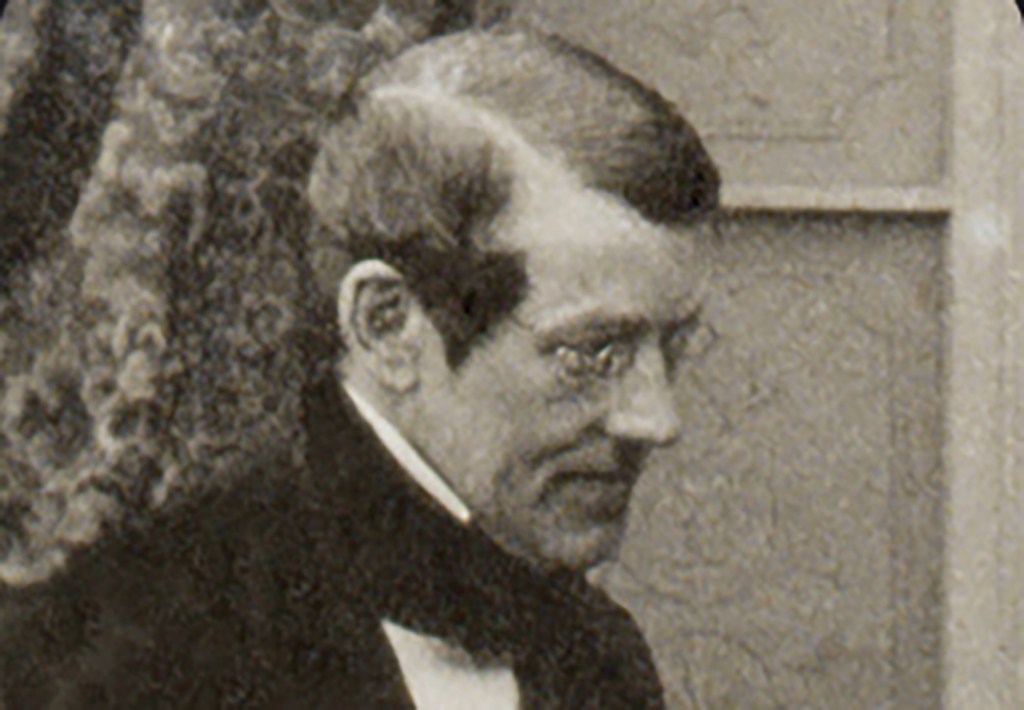
Charles Wheatstone, by Antoine Claudet. Stereoscopic daguerreotype, 1854. National Portrait Gallery collection, NPG P154.
1855
- Feb. 13th: Birth of daughter Angela Wheatstone.
- Elected as a Chevalier of the Legion of Honour, France.
- One of the jurors of the Universal Exhibition at Paris, in the class for “heat, light and electricity.”
- Publication: A paper entitled ‘An account of some experiments made with the submarine cable of the Mediterranean Electric Telegraph’ Journal of the Franklin Institute, 1855, Vol. 60, Issue 6, p.397-400.
- Publication: A pamphlet entitled A reply to Mr. Cooke’s pamphlet, ‘The Electric Telegraph; was it invented by professor Wheatstone? (London: Taylor and Francis, 1855).
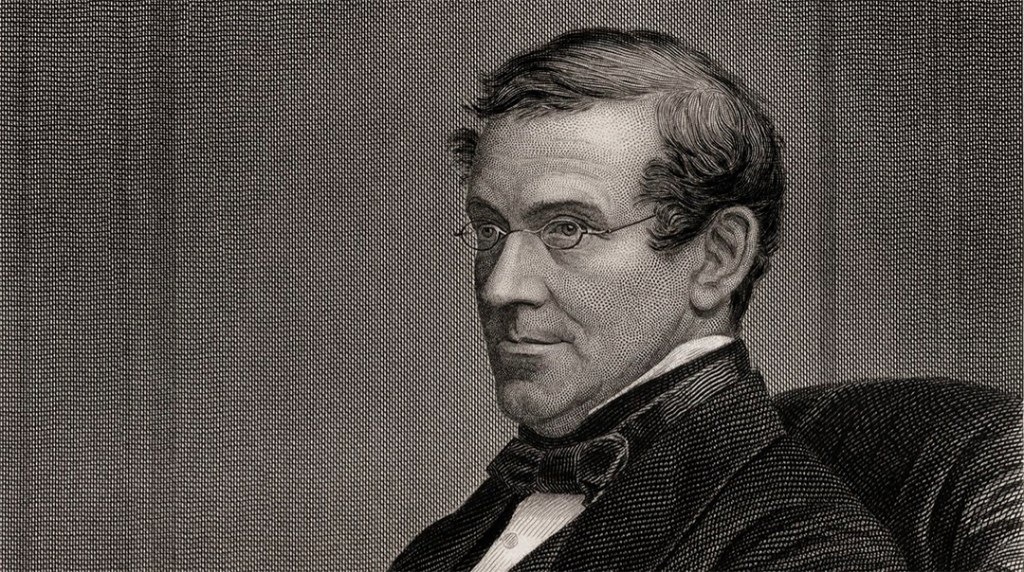
Charles Wheatstone, by William Edward Kilburn. Engraving by C. Cook after a daguerreotype, c.1855; engraving: 1860s. Private collection.
1856
- Publication: A paper entitled ‘On Fessel’s Gyroscope‘, Proceedings of the Royal Society of London, 1856, Vol. vii, p.43-48. [Written 1854]
- Publication: A paper entitled ‘On the Formation of Powers from Arithmetical Progressions‘, Proceedings of the Royal Society of London, 1856, Vol. vii, p.145-151. [Written 1855]
- Publication: A paper entitled ‘An Account of some Experiments made with the Submarine Cable of the Mediterranean Electric Telegraph‘, Proceedings of the Royal Society, 1856, Vol. vii, p.328-333.
- Publication: A paper entitled ‘Note on the Position of Aluminium in the Voltaic Series‘, Proceedings of the Royal Society, 1856, Vol. vii, p.369-370.
1858
- Developed the automatic high speed telegraph.
- Patent: Wheatstone, C, 1858, ‘A.D. 1858, No. 1241 [Improvements in electro-magnetic telegraphs and apparatus used for transmitting signs or indications to distant places by means of electricity]’, England & Wales.
1859
- Elected to the Royal Swedish Academy of Sciences.
- Publication: A paper entitled ‘Télégraphe automatique écrivant’, Comptes Rendus de l’Académie des Sciences, 1859, tome xlviii, p.214-220.
1860
- Patent: Wheatstone, C, 1860, ‘A.D. 1860, No. 2462 [Improvements in electro-magnetic telegraphs and apparatus for transmitting signs or indications to distant places by means of electricity, and in the means of and apparatus for establishing electric telegraphic communication between distant places’, England & Wales.
1861
- Publication: A report entitled ‘On the Circumstances which Influence the Inductive Discharges of Submarine Telegraphic Cables’, Report on the Joint Committee appointed by the Lords of the Committee of Privy Council for Trade and the Atlantic Telegraph Company, to inquire into the Construction of Submarine Telegraph Cables (London: Eyre & Spottiswoods, 1861).
- (Jointly with F. A. Abel) Report to the Secretary of State for War on the Application of Electricity from Different Sources to the Explosion of Gunpowder, November 1860, Her Majesty’s Stationary Office, 1861.
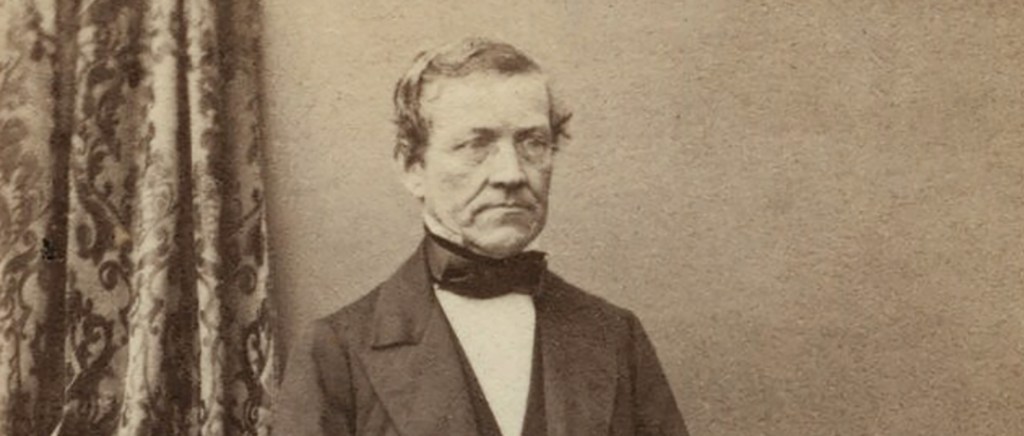
Charles Wheatstone, by Antoine Claudet. Carte de visite, c.1861. Private collection.
1862
- William Dolman Wheatstone, brother, died, with Charles taking over the business as ‘Wheatstone & Co.’.
- July 2nd: Created Doctor of Civil Law by the University of Oxford.
- Made Vice President of the Royal Society (until 1864).
- Was the first person to decifer a cipher from the British Museum, with every page at the top signed by King Charles the First and countersigned by Lord Digbye, then translated it.
- Publication: A paper entitled ‘Interpretation of an important Historical Document in Cipher’ Memoirs of the Philobiblon Society, 1862, Vol. 7.
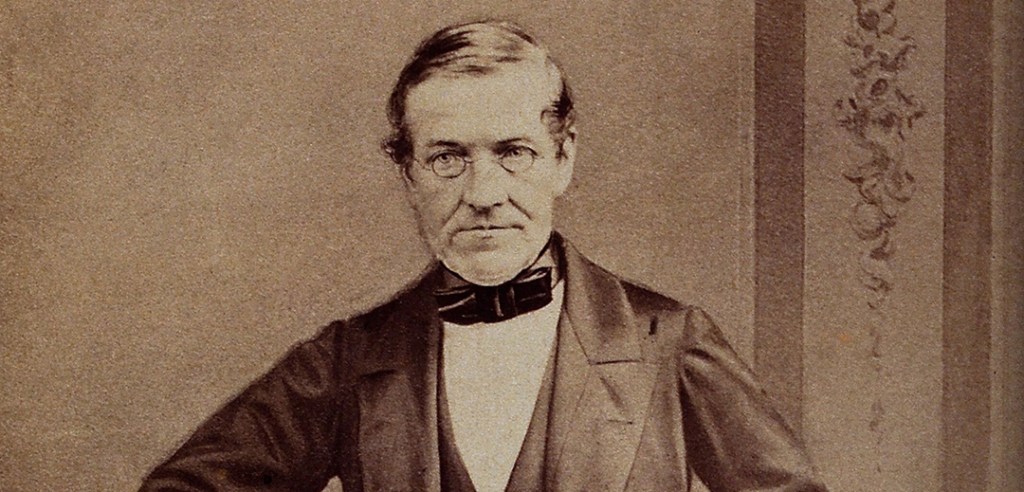
Charles Wheatstone, by Hills and Saunders. Carte de visite, c.1863. Private Collection.
1864
- Created Legum Doctor by the University of Cambridge.
1865
- January 25th: Death of wife, Emma Wheatstone, age 57.
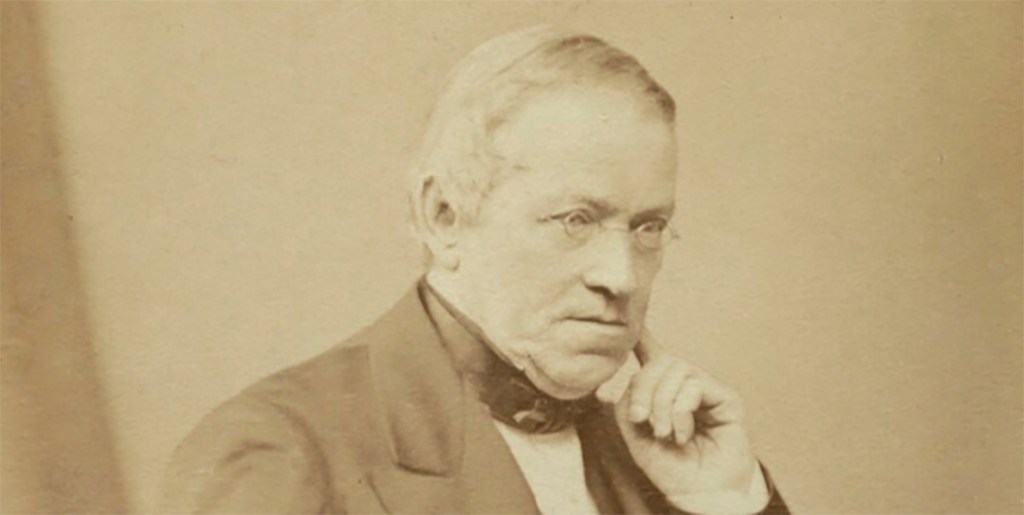
Charles Wheatstone, by the London Stereoscopic Company. Carte de visite, c.1865. Private collection.
1867
- Publication: A paper entitled ‘On a New Telegraphic Thermometer, and on the Application of the Principle of its Construction to other Meteorological Indicators’, Report of the British Association, 1867, p11-13.
- Publication: A paper entitled ‘On the Augmentation of the Power of a Magnet by the Reaction thereon of Currents induced by the Magnet itself‘, Proceedings of the Royal Society, 1867, Vol. xv, p.369-372.
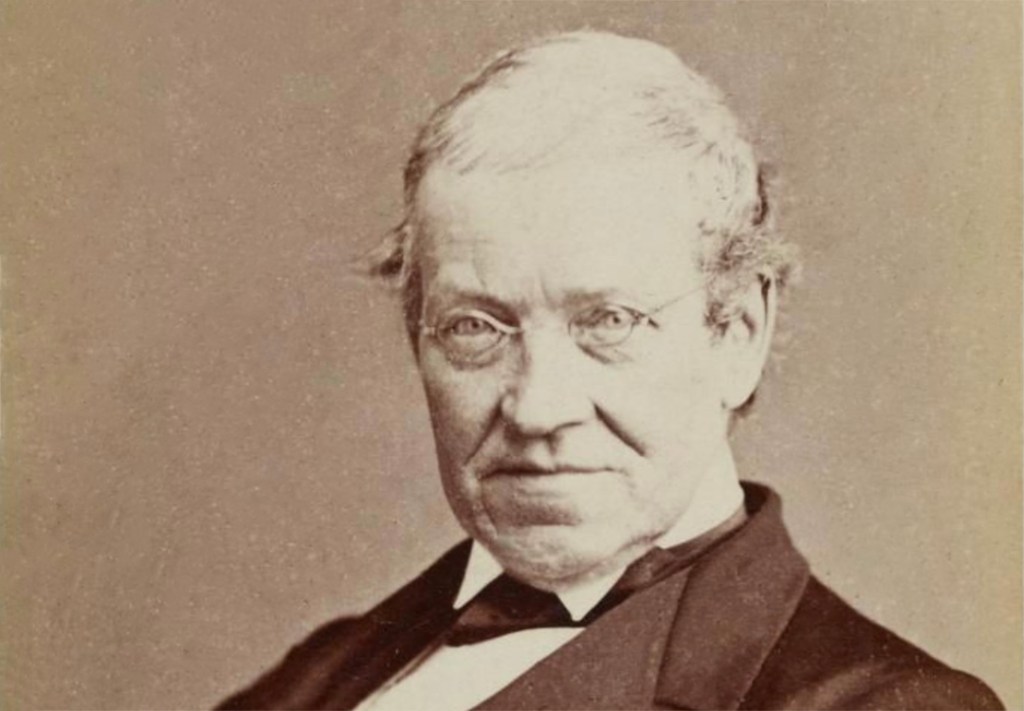
Charles Wheatstone, by J. Whitlock. Carte de visite, c.1867. Private collection.
1868
- January 30th: Knighted by Queen Victoria for his considerable scientific achievements and valuable inventions.
- Received the Copley Medal from the Royal Society, for his researches in acoustics, optics, electricity and magnetism.
1869
- Awarded the honorary Doctor of Laws (LLD) degree by the University of Edinburgh.
- Became council member of the Photographic Society of London.
1870
- c.1870, invented the Wheatstone Cryptograph.
- Publication: A paper entitled ‘On a cause of Error in Electroscopic Experiments‘ Proceedings of the Royal Society, 1870, Vol. xviii, p.330-333.
- Publication: A pamphlet entitled ‘Instructions for the Employment of Wheatstone’s Cryptograph’ [No date given, pamphlet accompanying the instrument].
1871
- Publication: A paper entitled ‘Experiments on the Successive Polarization of Light, with the Description of a new Polarizing Apparatus‘, Proceedings of the Royal Society, 1871, Vol. xix, p.381-389.
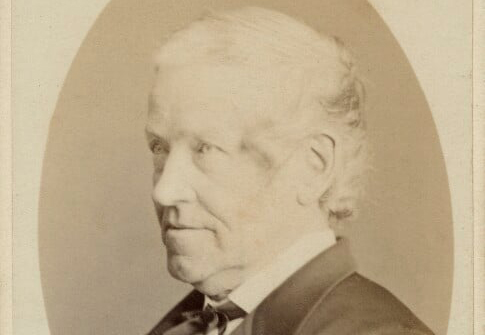
Charles Wheatstone, by John Jabez Edwin Paisley Mayall. Carte de visite, 1871.
1873
- Elected as a foreign associate of the Académie des Sciences.
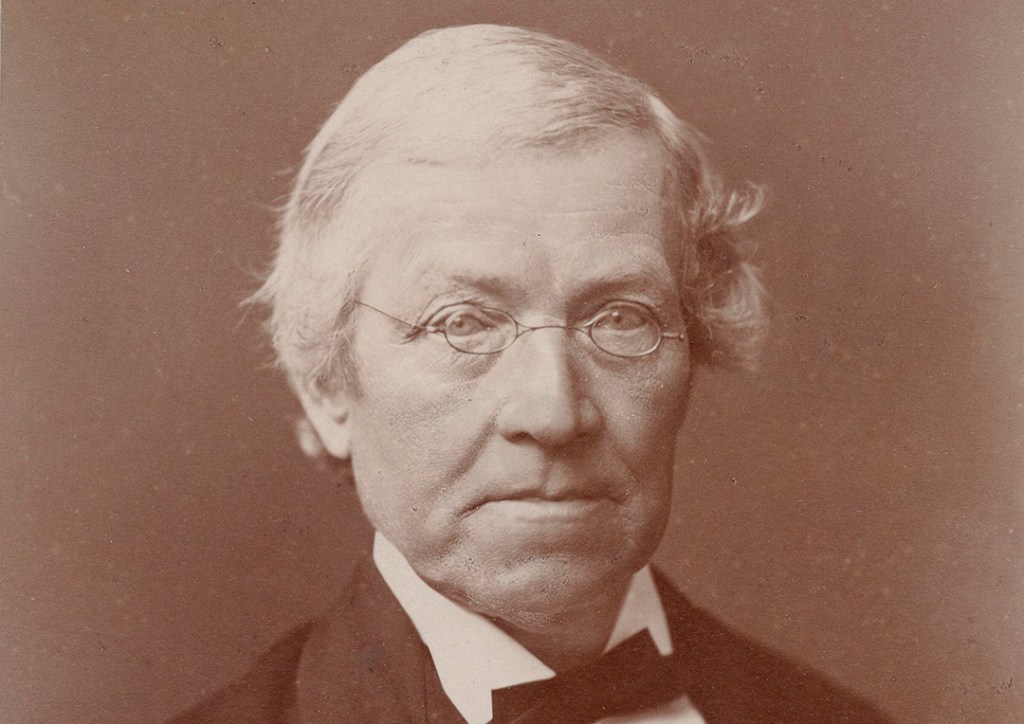
Charles Wheatstone, by Félix Nadar. Albumen print, c.1873. Bibliothèque nationale de France collection, ark:/12148/btv1b530921076.
1875
- Became an honorary member of the Institution of Civil Engineers.
- October 19th: Died age 73, from bronchitis whilst on business in Paris, France.
- October 27th: Funeral and burial at Kensal Green Cemetary, London.
Sources:
- Brian Bowers, Sir Charles Wheatstone FRS 1802-1875, edited by Dr. B. Bowers and Dr. C. Hempstead (London: The Institution of Electrical Engineers, 2001).
- King’s College, London, Wheatstone Collection [Webpage: 14th May 2020] https://www.kcl.ac.uk/wheatstone-collection
- Jean-Francois Fava-Verde, ‘A tale of two telegraphs: Cooke and Wheatstone’s differing visions of electric telegraphy‘ Autumn 2017.
- Denis Pellerin, Stereoscopy: The Dawn of 3-D edited by Brian May (London: The London Stereoscopic Company, 2021).
- The Physical Society of London, The Scientific Papers of Sir Charles Wheatstone (London: Taylor and Francis, 1879).
- Popular Science Monthly, ‘Sketch of Sir Charles Wheatstone’, January 1876, p.1-7.
- The Royal Society, ‘Wheatstone; Sir; Charles (1802 – 1875); physicist’, Past Fellows [Webpage, accessed August 2024] https://catalogues.royalsociety.org/CalmView/Record.aspx?src=CalmView.Persons&id=NA7559&pos=1
- George Smith, ‘Wheatstone, Sir Charles (1802-1875)’, Dictionary of National Biography, Vol. 20, edited by Sir Leslie Stephen and Sir Sidney Lee (Oxford: Oxford University Press, 1921-1922) p1346-1348.
- Additional research: Rebecca Sharpe, Brian May Archive of Stereoscopy.
 CharlesWheatstone.com